A pink slip checks a fixed list set by Transport for NSW, and the same list applies wherever the car is inspected. Most cars that fail don’t fail on anything dramatic. They fail on parts that wear out quietly, which is also why an inspection is rarely the only cost on the day.
What does a pink slip inspection check?
A pink slip is not a general opinion about your car. It is a fixed list, set by Transport for NSW in the Light Vehicle Safety Check Standards, and every Authorised Inspection Scheme examiner works through the same one.
Broadly, it covers:
- Brakes. The controls, how the pedal behaves, and the condition of the visible components.
- Steering and suspension. Play, wear and anything loose or damaged.
- Wheels and tyres. Tread, damage, and how the tyres are matched across an axle.
- Body condition. Doors and latches, mirrors, seats and seatbelts, the windscreen and window tint, wipers, the horn, number plates, and rust in the parts that hold the car together.
- Lighting. Every lamp and reflector on the car, and the aim of the headlights.
- Engine and driveline. Oil leaks, the exhaust, mountings, and the catalytic converter where one applies.
- Fuel systems, including LPG and CNG installations where they are fitted.
Trailers and caravans get a shorter version of the same thing, with the coupling and safety chains added. That is covered in caravan and trailer pink slips.
Why do cars fail a pink slip?
Most cars that fail do not fail on something dramatic. They fail on parts that wear out quietly and give no warning until someone looks at them properly.
Tyres. A common one. Tread wears unevenly, and the inside edge, which nobody sees, often goes first.
Lights. A single globe fails the car, and the ones people never notice are the number plate light and the rear fog or reversing lamps. A cracked lens that lets the wrong colour show to the rear is a fail too.
Wipers. Blades perish in the sun. A blade that has gone hard, split or started to lift off the glass does not meet the standard, whatever it looks like from inside the car.
Batteries and electrics. A battery on its way out does not fail the inspection on its own, but it takes other things with it: warning lamps that behave oddly, lights that dim, a car that will not restart during the check.
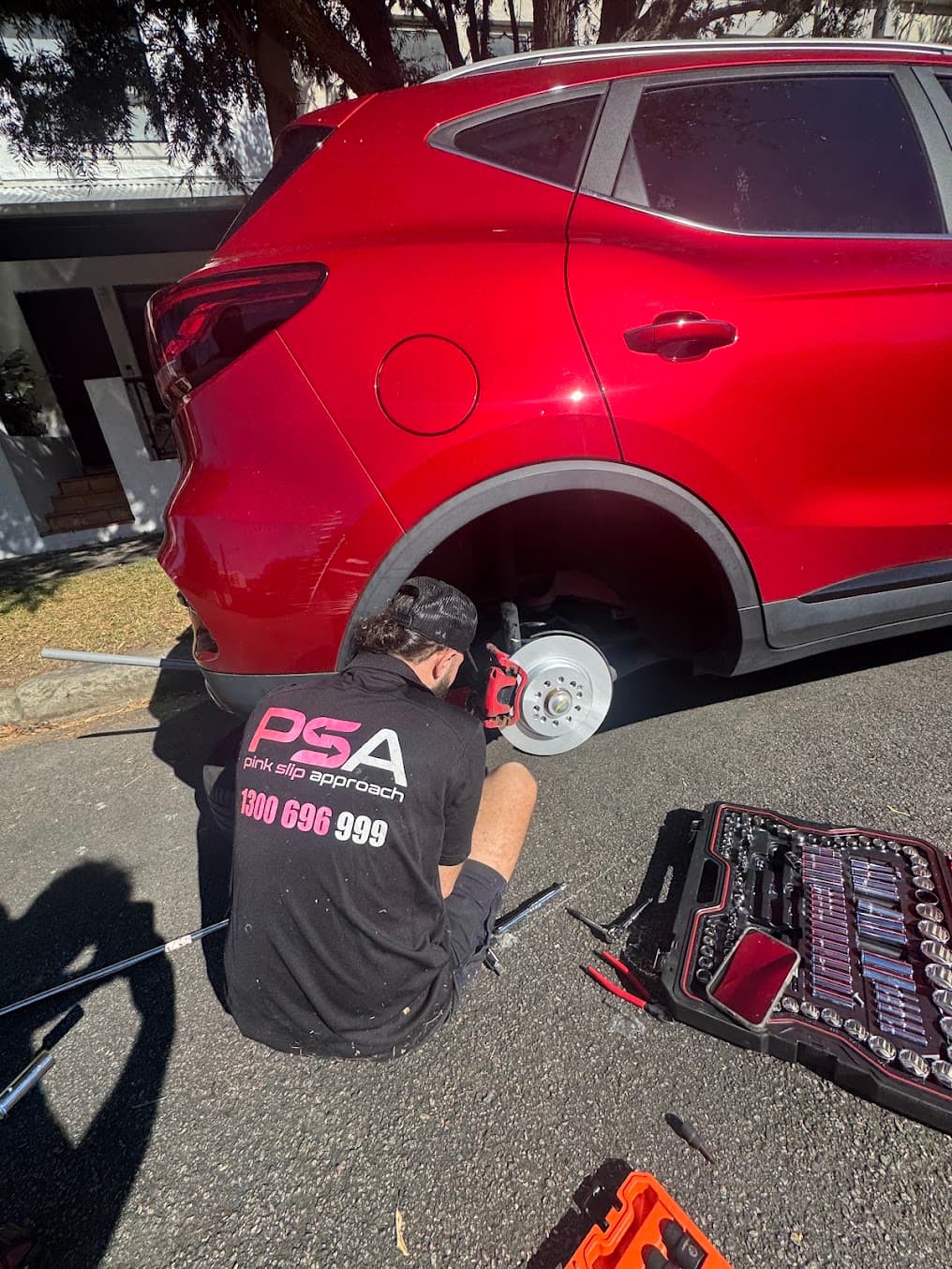
Brakes. Pads, discs and the way the pedal feels. This is where a fail often turns into real work rather than a part swap.
Rust and leaks. Corrosion in a structural area, and oil dropping onto the road, the exhaust or the brakes.
What a fail can add to the day
This is the part worth planning for, because a pink slip is rarely the only cost when a car has not been looked at for a year.
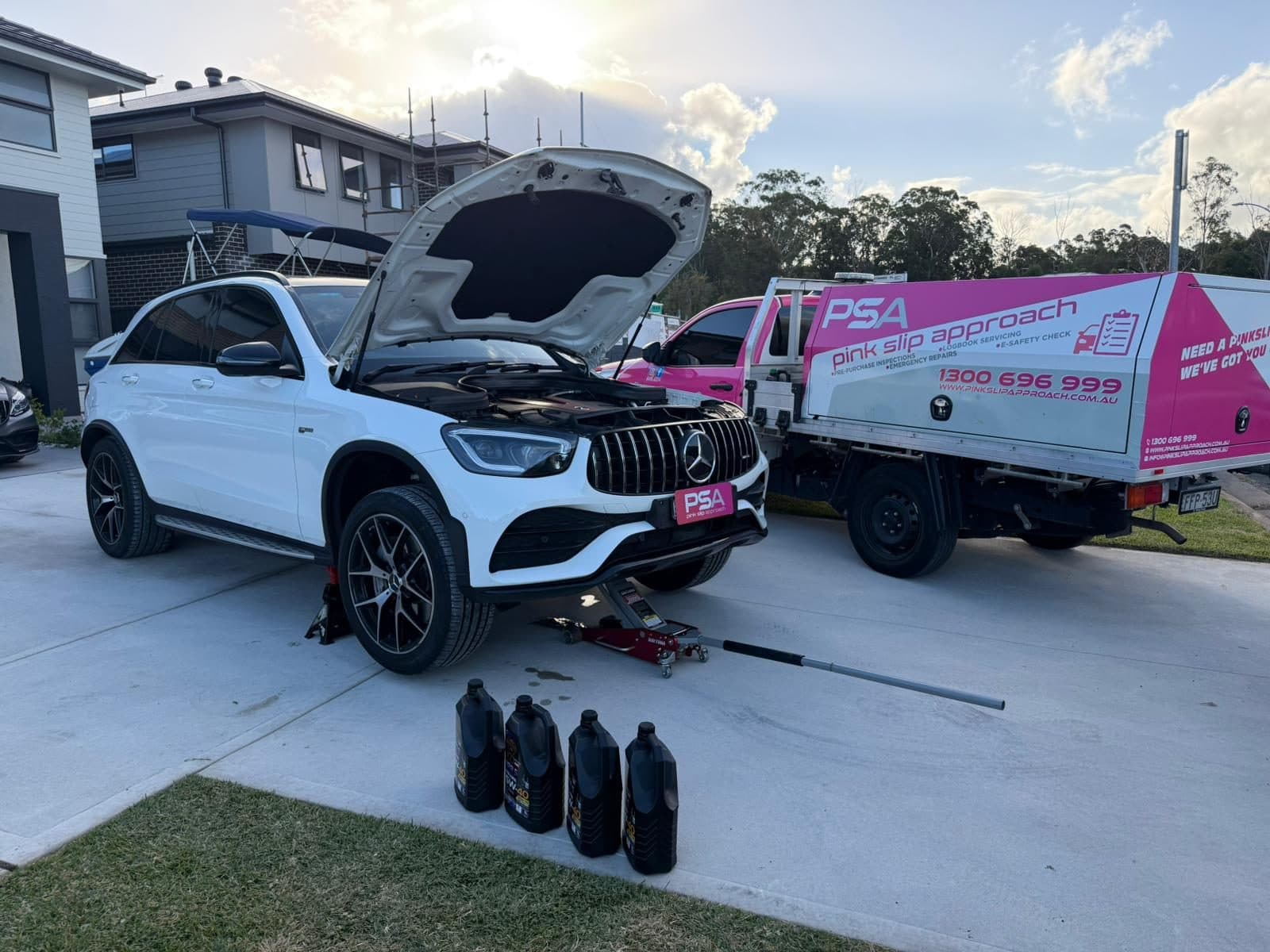
Items like globes, wiper blades, batteries and filters are consumables. They wear out on a schedule whether anyone inspects the car or not, and when they come up at an inspection it is usually because they were already due. Depending on the part and the car, some of them can be supplied and fitted during the visit, so the car passes the same day rather than waiting on a second appointment.
Tyres, brakes, steering and suspension work sit in a different bracket. They take longer, the parts cost more, and they usually need to be booked rather than done on the spot.
Three things follow from that:
- Budget for the inspection plus something. Not because inspections are designed to find problems, but because a car a year older than its last check usually has some.
- Ask what the fix is worth before you agree to it. Any technician worth using will tell you what is urgent and what can wait until the next service.
- You choose who repairs it. There is no obligation to have the work done by whoever inspected the car, and nobody should be offended if you get another quote on anything expensive.
What nobody can tell you in advance
Not us, and not anyone else quoting you over the phone.
An inspection is an assessment of a specific car on a specific day. Two identical models of the same year can come back completely differently, and no one can promise a pass before looking at it. Anyone who does is telling you what you want to hear.
What we can do is tell you what failed, what it takes to fix, and what can be sorted during the visit rather than at a second one.
If it does fail
You have 14 days to repair it and return to the same inspection station without paying a second inspection fee. After that, it is a new inspection at full price. What to do after a failed pink slip covers the rest.
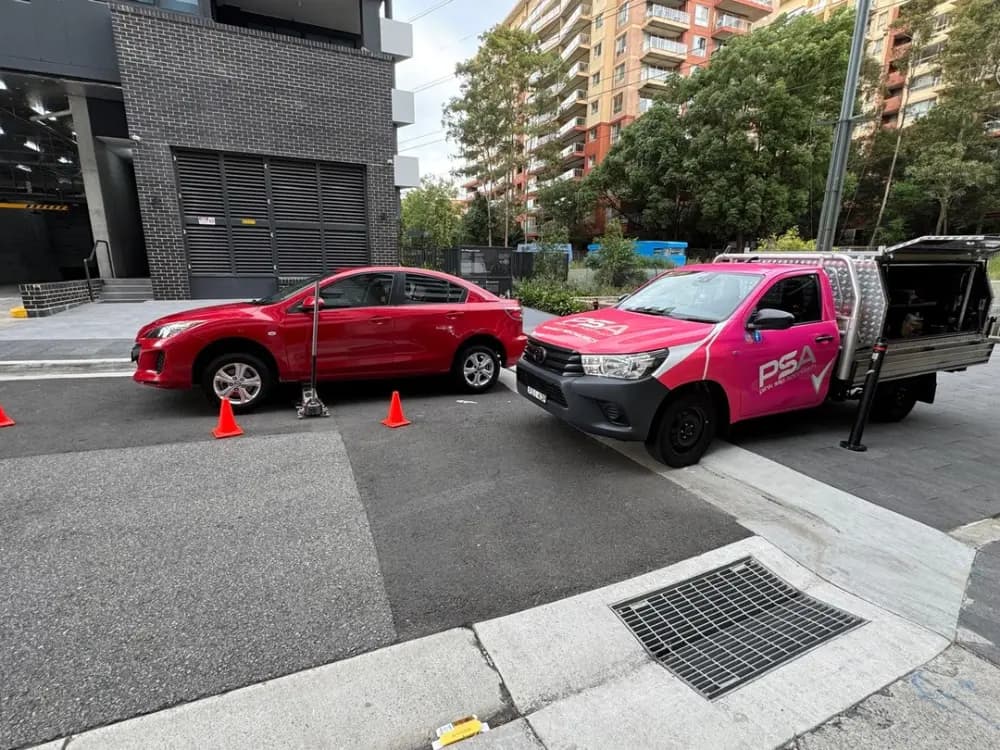
If your rego is due and you would rather not lose a morning to a workshop, you can book a mobile inspection and we will come to the car. If you want to talk it through first, call us on 1300 696 999.
Quick answers
What does a pink slip inspection check?
Brakes, steering and suspension, wheels and tyres, body condition including seatbelts, windscreen, wipers and rust, all the lighting, and the engine and driveline including oil leaks and the exhaust. The list is set by Transport for NSW.
Why do most cars fail a pink slip?
Usually on parts that wear out gradually, often tyres, lights and wiper blades, and on brakes where the work is larger. Serious structural faults are much less common.
Do I have to have the repairs done by whoever inspected my car?
No. You can have the work done wherever you like. Some items can be supplied and fitted during a mobile visit so the car passes the same day, but the choice is yours.
Where these facts come from
- Transport for NSW, Light Vehicle Safety Check Standards (Section 2 of the AIS Rules) (opens in a new tab). Checked 21 September 2026.
- NSW Government, eSafety checks (pink slips) and vehicle inspections (opens in a new tab). Checked 21 September 2026.